I saw this quote recently and it went something like –
“ Everyone you meet experiences a different version of you.”
Little did I know, when I tried to find that quote, I stumbled upon this big philosophical discussion on the idea of what “ The Real You “ actually is.
Now, for any of you brilliant minds who know if this is an actual labelled phenomenon please let me know, but from my research on it I have come to realize that the discussion intersects many studies and therefore is approached in mannnnyyy different ways.
Philosophy seems to touch on personal identity – what makes YOU, you. Philosophers like John Locke made the argument that memory and consciousness define the “real you.” Jean-Paul Sartre suggested that there is no fixed version of you that exists but that you become who you are through your choices and actions.
Psychology discusses who you are through your own understanding – your beliefs, traits and identity- referred to as your self-concept. Carl Jung spoke about the Ego vs Self – the conscious ego and the deeper self, which includes unconscious aspects of who you are. Sociologist Charles H. Cooley spoke on the concept of the “looking-glass self,” explaining that who we are is shaped partly by how we believe others see us.
And then there are perspectives such as Buddhism that offer a different viewpoint than the other disciplines. Rather than the self being a fixed identity, it is constantly changing – that it is impermanent and there is no permanent or unchanging “real you” at all.
I know that there probably are tons of theories out there that have their own suggestions/beliefs/opinions on our YOU-NESS.
But then who are you really?
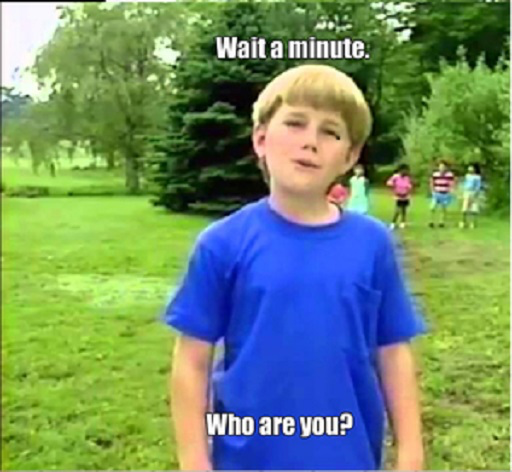
Our family, coworkers, and friends all would have had experiences with us that would carry a unique and valid (in their minds) perspective. That perspective would be shaped by their interactions with us, which are indeed both biased and limited.
People therefore construct their own “version” of us, based on their own beliefs, not actually on who we are.
The taxi man we cut off the road, the coffee shop barista who spoke to us when we had a bad day, the coworker who we spoke over in a meeting – all would have different stories of us which would be from a fixed moment in time.
Who we are then technically isn’t a fixed or singular identity, but somewhat a compilation of hundreds, even thousands of different stories that are lodged in the minds of others. And then the kicker of all of this is that all this would then be ENTIRELY different than how we even perceive ourselves.
This then correlates to how we even view ourselves. We sometimes tend to label ourselves, or our attributes, both good and bad, from the opinions of others. We believe we are a respectful person because we are told. We believe we are attractive because we are told. Over time, these external reflections start to feel like truth, when in reality they are just fragments shaped by limited moments, specific interactions, and individual perspectives. ( And look, It is not to say that peoples perspectives aren’t right/true, but it’s to say just that – they are perspectives based on intentional or unintentional interactions. )
What this ultimately tells us then, is that since everyone is holding only a partial and biased version of you, none of those versions then can fully and truly define you.
And understanding this right here, is freedom.
You cannot control how every person experiences you, or the version of you that they carry with them. Trying to manage every perception from every single person you meet would be not only exhausting, but truly impossible. Think of it as everyone just seeing a picture of your life, not the full video.
So where does one find the REAL YOU?
In my opinion, the real you is found in the version of yourself that you can control – the ones shaped by your values and your intentions. The real you is found in the choices you make when no one else is watching. The real you isn’t what others see, it’s what you see and nurture for yourself.
Once you are being true to that, you rely less on the opinions of others, and the right people will believe it too. Anyone can experience a version of us, but we are the only ones that live all of them.
We are the authors of our own life and when we stop giving others access to write our story or define our identities, life becomes that much better.
 The Graceful Human
Leave a Reply